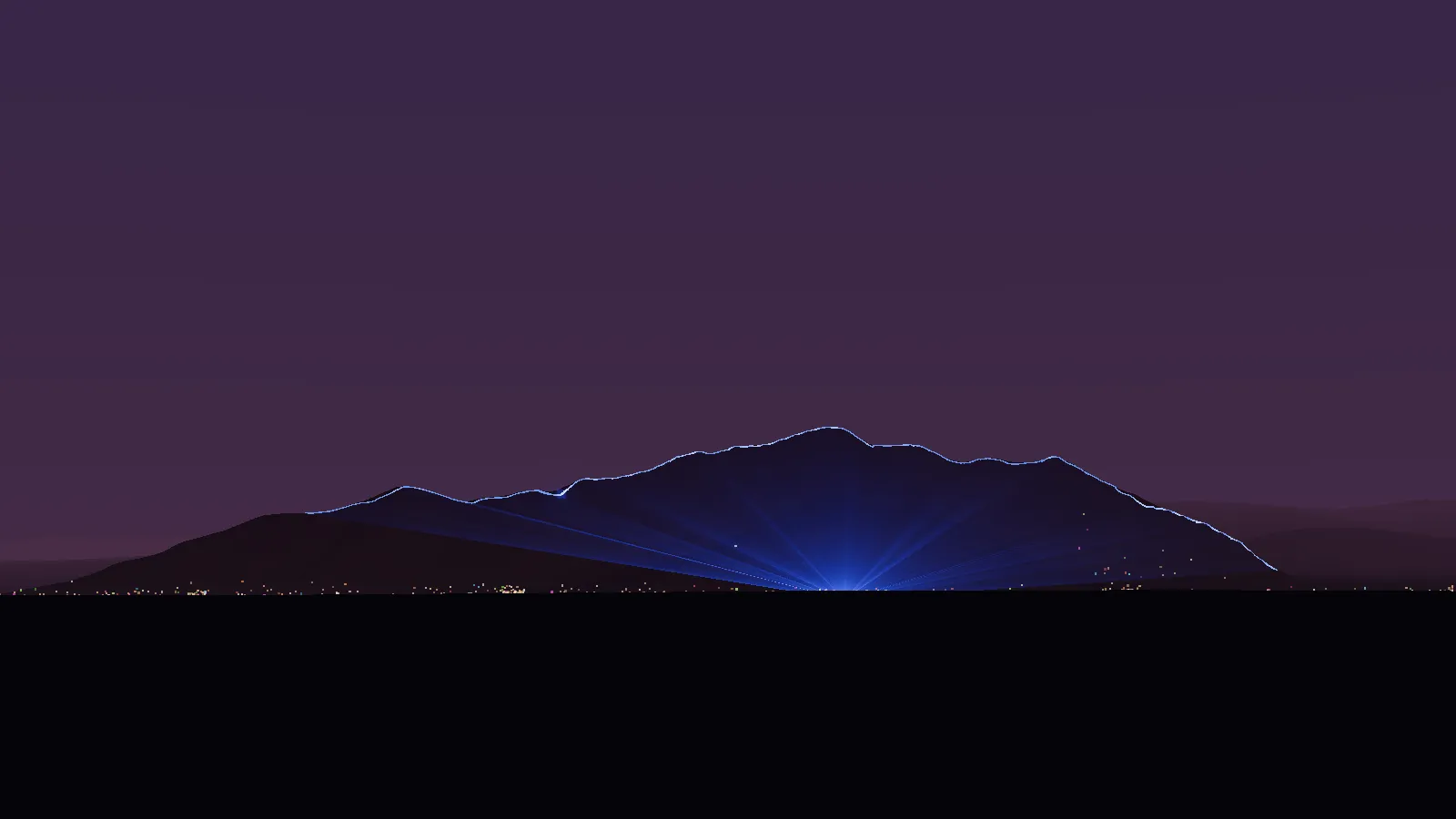
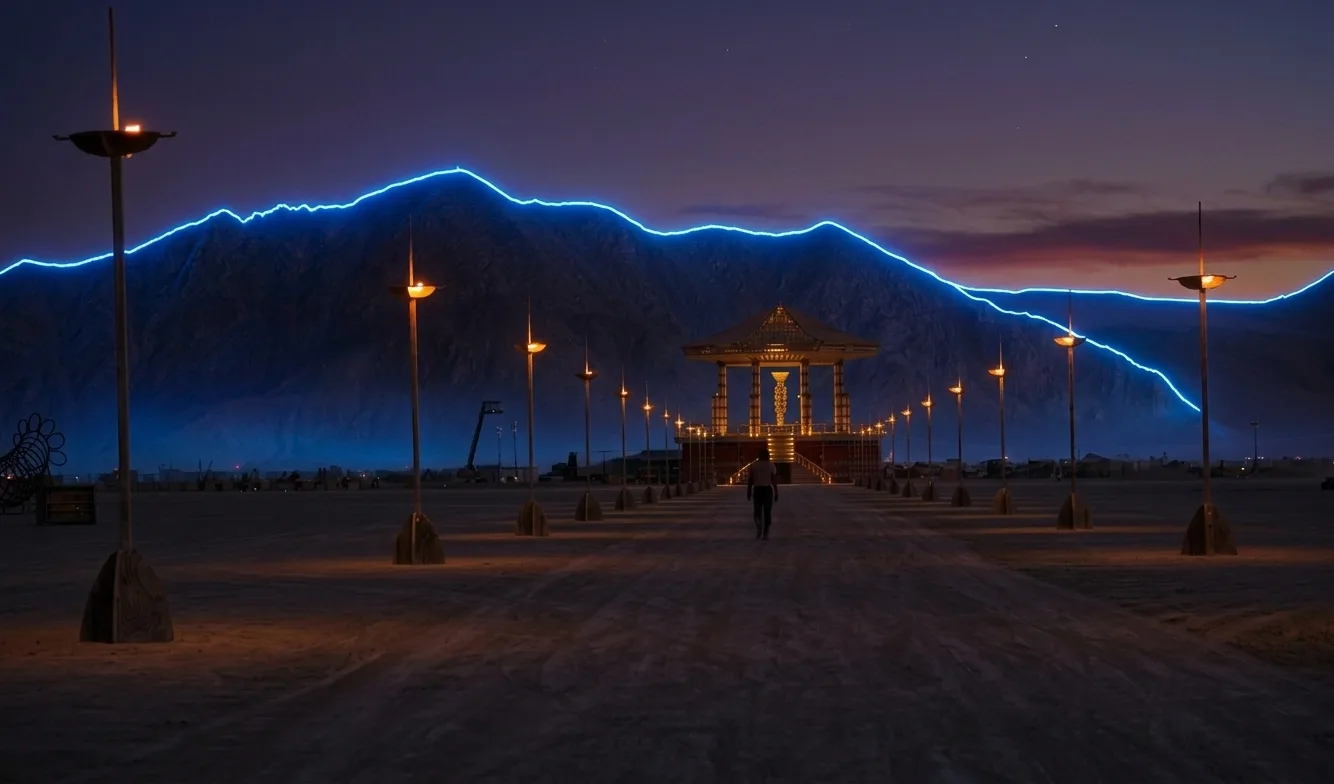
Razor’s Edge highlights the ridge of Old Razorback Mountain outside of Black Rock City with a vivid laser projection.
During a visit to Yangshuo, China in 2019, I attended a large-scale outdoor performance set on the river. It was nighttime, and a major focus of the show was a series of different illuminations through LED suits, lanterns, and lights on rafts.
Partway through the show the mountains in the far distance flashed out of the darkness– the production had placed huge flood lights below them. Although we had seen the mountains coming in it was easy to forget they were there. It was shocking to see them reappear so quickly.
One of the less noticed parts of Burning Man’s beauty is the ring of mountains around the Black Rock desert. They provide the setting for incredible sunsets, but they fade away into the darkness and dust storms. You can’t approach them from the city. At night when the party is really going it’s easy to forget they’re there at all.
A Visible Mountain At Night
Old Razorback Mountain is the closest and most prominent mountain to Black Rock City. It’s probably the one most people think of as the obvious mountain in the distance, set to the east side of the playa. You face it coming in on gate road.
Razor’s Edge proposes to highlight the ridge of Old Razorback at night with a 2D laser projection. This will “extend” the glow of the sunset through the darkness. It will remind attendees that the mountains are still out there, even after nightfall.
The laser projection will be limited to only the ridge of the mountain, with a series of color shifts and animations to expand on the visual interest. The piece will start each night with the line drawing itself out across the ridge, and end in the morning with it gradually shortening to a single point.
Technical Feasibility
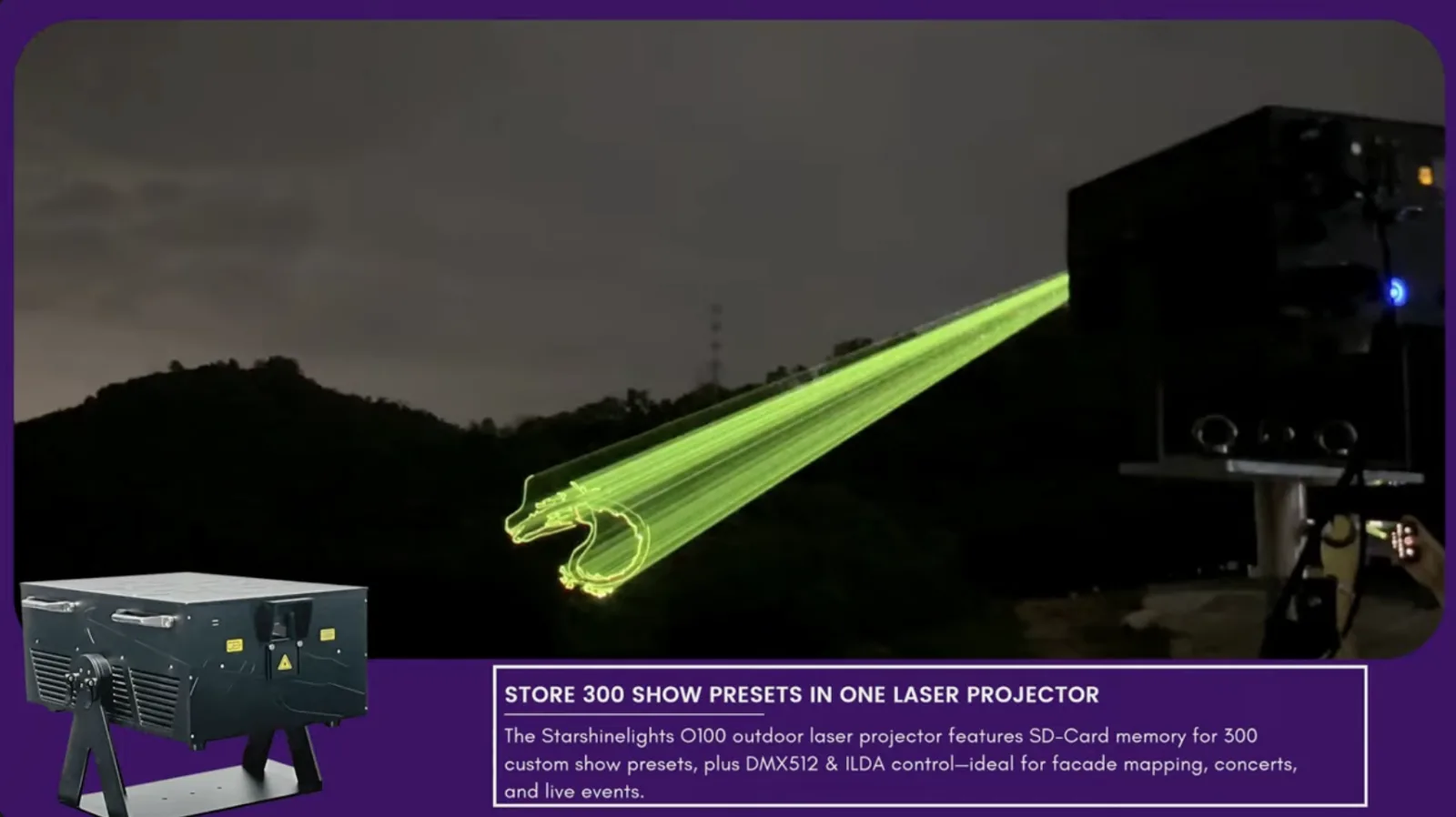
High powered laser projectors capable of projecting onto mountains in this way exist. It looks like they need to support 200W of power output. It may be necessary to use multiple of these to achieve the full width of the ridge, or to achieve an appropriate brightness.
I’ve identified two possible options:
- Starshine Lights O100 ILDA 200W
- This unit’s demo reel has a very clear section demonstrating the ability to illuminate mountains and distant features.
- Newfeellight Professional 200W
- Similarly, Newfeellight has a demo reel of projecting onto a mountain.
These projectors work by scanning the laser beam across the path of their drawing. A simple line like the proposed ridge would allow these vectors to be simple and avoid needing to turn the laser off between lines. This should help with maintaining a consistent image and high brightness.
Risks and Challenges
Although I believe this project is technically feasible, there are a number of major challenges involved. These are partly technical, but also issues of permission and regulations. Here are the key challenges:
- Laser safety
- Projection distance
- Dust occlusion and rays
Laser Safety
The projectors needed to achieve this effect are at the highest range of laser power available. A 200W laser could burn skin or instantly blind someone if operated improperly.
- Burning Man released new regulations in 2026 regarding lasers and their use during the event.
- The FAA would need to sign off on this use.
Projection Distance
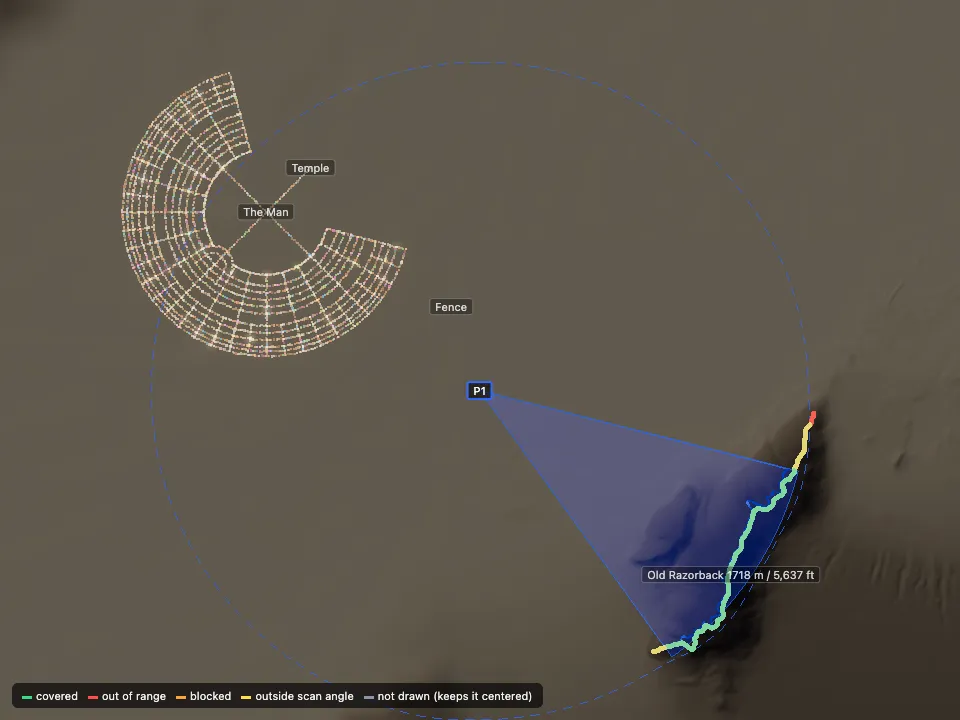
Newfeellight’s projector mentioned above lists a 4 km range for the laser. This is too short to put the laser inside the city limits: the distance to the mountain ridge from there is about 3.3 miles or 5.3 km.
- The laser projector would need to be placed outside the limits of the city in order to reach the mountain.
- With a shortened throw, we may need multiple projectors to cover the whole ridge.
Placement outside of the main event area changes who may need to grant permission for this project. Burning Man’s permits extend outside of the city somewhat, but probably not as far as 1-2 km out.
This would also mean that the laser could not be accessed easily by attendees. Laser safety issues would be different and perhaps somewhat less stringent than operating inside the city limits. However, I do think we should try to maintain the same rigor.
Dust occlusion and rays
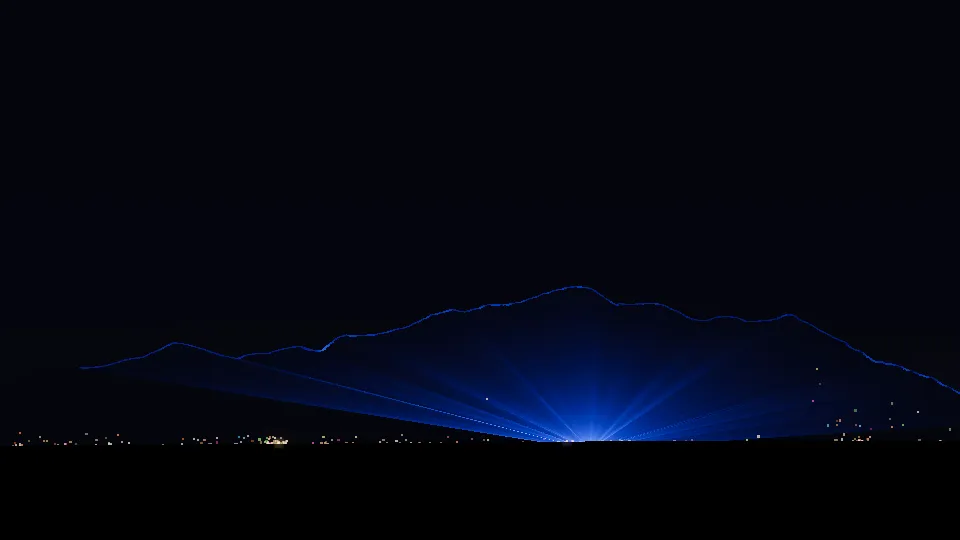
Dust particles in the air cause the laser light to diffuse. This causes a “ray” effect along the path of the laser light. It also causes the light to lose part of its illumination as it travels to its target.
The ray’s path from the laser would cause the mountain area to appear partially filled in below the highlight line. This would prevent a “clean” line from appearing along the mountain. The light source or sources would become visible since the rays would lead back to it directly.
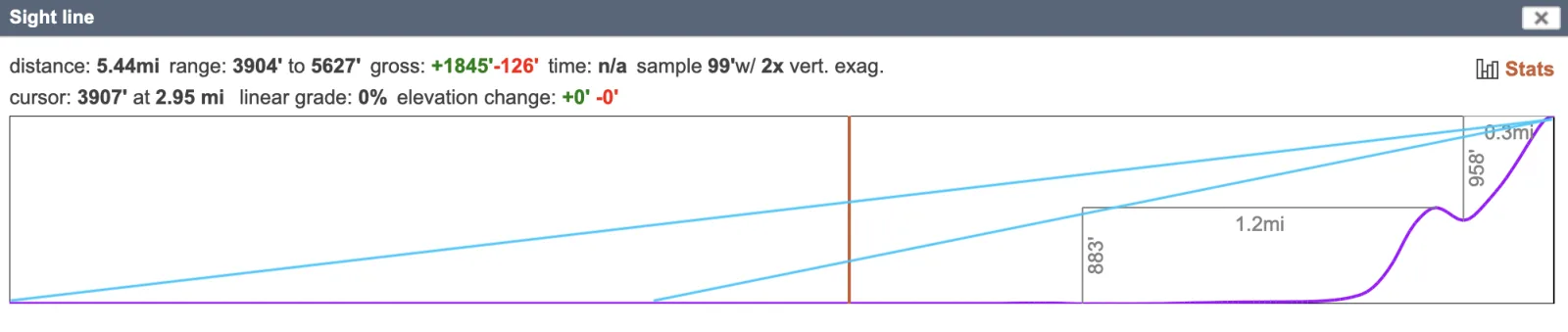
The possible solution of raising the projector up above the viewer’s sight line is not feasible here. The projector’s maximum range (red) would require a tower at least 400’ tall to rise above the viewer’s sight line (cyan) even at the near side of the city. Someday if a longer range were possible the projector could be placed with the viewers between the source and the target.
Substantial dust storms or whiteouts would prevent the show from running at all. The system should detect these conditions and automatically shut off.
Cost
Laser projectors of this size and the equipment to run them are expensive. Each unit would need its own power system and computer to run it.
- Projector MSRP range: $31k – $86k
- Tariffs and taxes would also need to be applied, which could raise the cost by 50% or more: $46.5k – $129k
The total cost depends on how many projectors are needed, which depends on their viewing angles.
Repurposing Equipment
The equipment acquired for this project could be easily repurposed for other pieces. Laser projectors are very versatile, and this is one of the attractions of taking this approach.
Some ideas:
- Could you cast a ray out over the ocean?
- Could you create a cone or a shape facing straight up?
- Could you project onto a cloud or surface in the sky?
- Could you raise the projector up off the ground and cast horizontally over an area?